The Anatomy of a Skeleton Dial
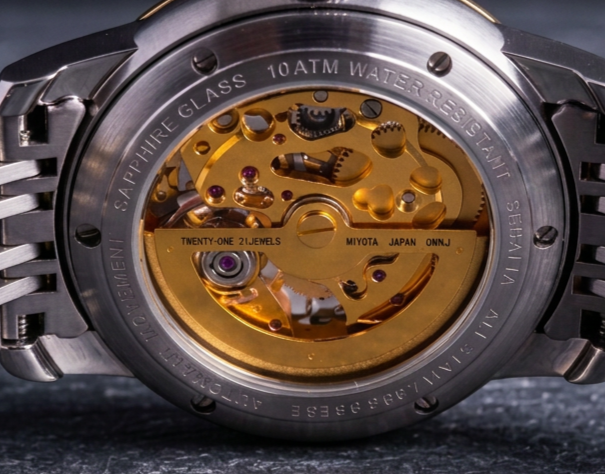
A skeleton dial does something most design choices don’t: it removes, rather than adds. Where a traditional dial hides the movement behind a solid face, a skeleton dial cuts that face away by exposing the gear trains, the balance wheel, the mainspring, and the slow, deliberate mechanics that keep time moving.
It’s one of the oldest tricks in mechanical watchmaking, and one of the hardest to get right. Removing material from a dial doesn’t just reveal the movement underneath but it exposes every flaw in it. A skeleton watch has nowhere to hide an unfinished edge, a rough bridge, or a movement that wasn’t designed to be looked at. If the mechanics aren’t built to be seen, cutting the dial away just shows you that.
That’s why a genuine skeleton piece, like the Regalia Imperial, Gold, Sovereign Skeleton, starts with a movement designed for visibility from the outset by building the bridges shaped with intention, not just function; a balance wheel positioned where it catches light and motion as your wrist moves; a case constructed to frame the mechanics rather than compete with them.
There’s also a practical romance to it. Every skeleton dial is a small argument for mechanical watchmaking itself: proof that what’s keeping time is a physical, moving thing, springs, gears, and a balance wheel oscillating roughly every fifth of a second, and there is neither a battery nor a chip. In a world where most devices hide their inner workings behind glass and plastic, a skeleton dial does the opposite. It shows its work.
That’s the appeal. Not just what a skeleton watch looks like on the wrist, but what it says: this is how it actually works, and we’re not hiding it from you.