Crafting the 316L Stainless Bezel
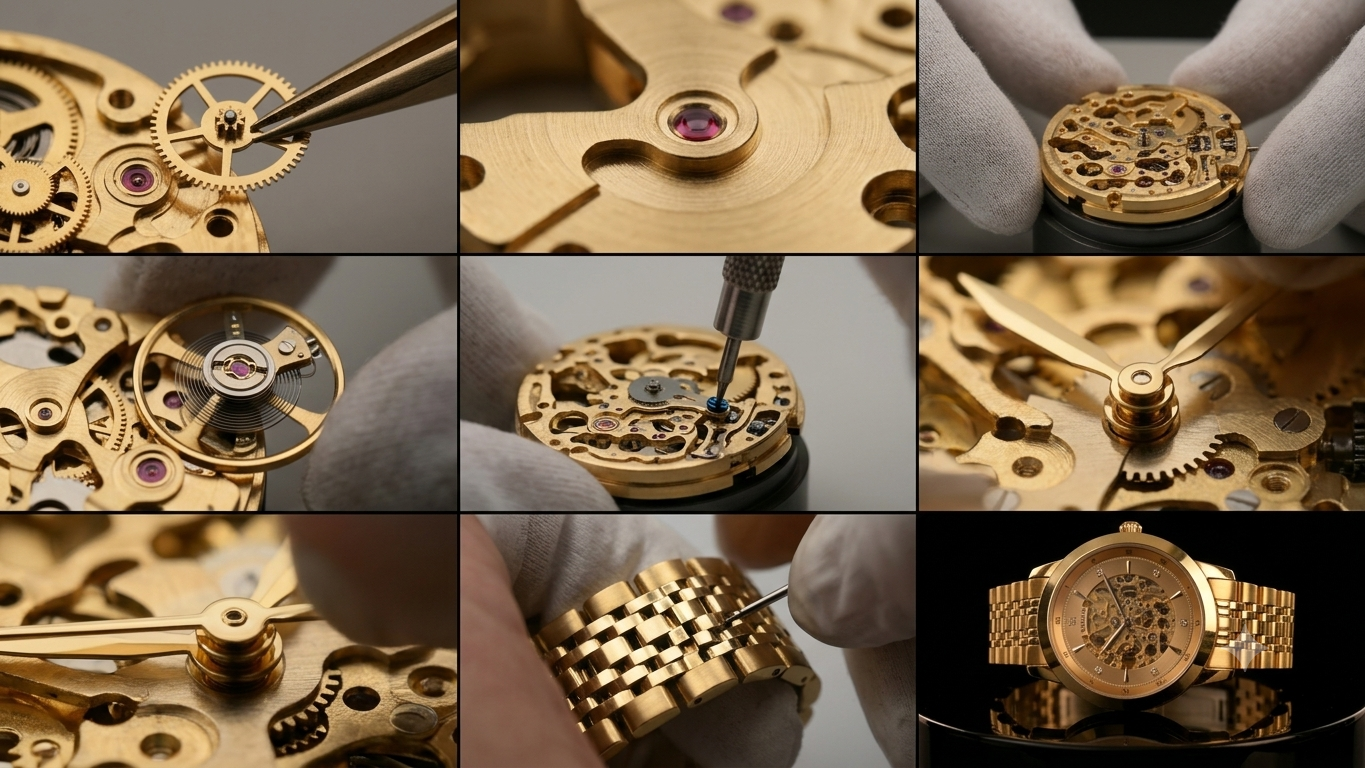
Every Regalia case starts as a decision most brands never have to explain, because most brands don’t make that decision themselves. But, We do; and it starts with the steel.
316L stainless steel is often called “surgical-grade” because it’s the same alloy family used in medical implants and instruments, and that is chosen for its resistance to corrosion, its strength, and the fact that it holds a polish without discoloring or pitting over years of daily wear. It’s the same standard used in the case construction of the world’s most respected Swiss watchmakers. There is no “better” version of 316L reserved for six-figure watches. The steel itself doesn’t know what price tag it’s attached to.
What changes the feel of a bezel isn’t just the alloy, it’s the finishing. A raw 316L blank has to be precision-machined to exact tolerances, then polished, brushed, or a combination of both, depending on the design language of the piece. On the Regalia Skeleton, for instance, the bezel carries a brushed finish that resists fingerprinting and micro-scratching under daily wear, while the case edges are polished to catch light without looking gaudy under office fluorescents or evening lighting.
This is slower and more expensive than stamping cases from a lower-grade alloy, but it’s the same process the watches costing ten times more go through, because there isn’t a shortcut that produces the same result.
We manufacture our cases to this standard because it’s the standard we set out to meet before we ever cut a single piece of steel. Not because a marketing team decided “surgical-grade” sounded good on a product page; because it’s genuinely what’s on your wrist.